B.S. / 124 credits
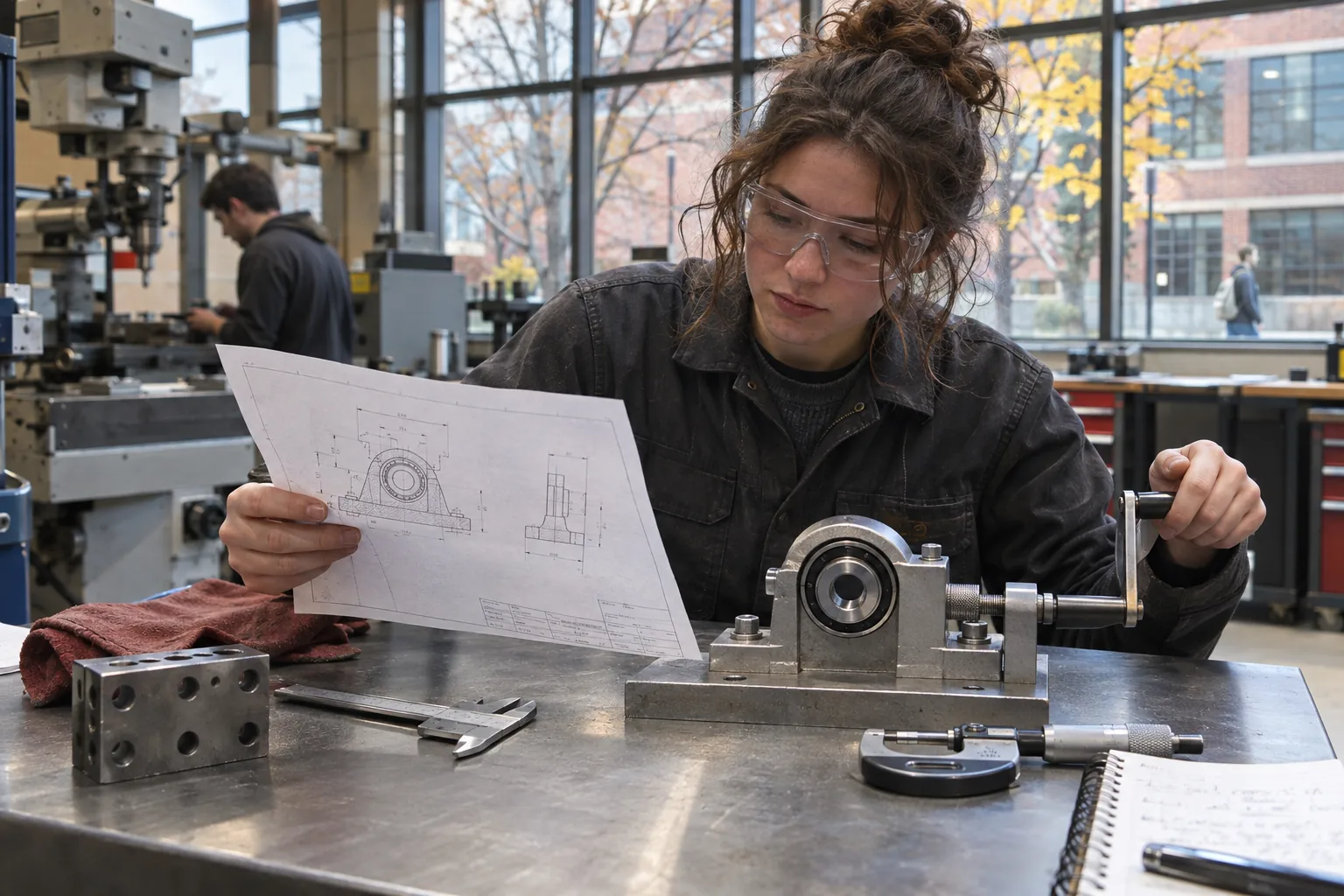
Mechanical Engineering Technology
Design, manufacture and verify mechanical components with evidence from models and physical tests.
ExploreAcademics
Ten bachelor’s programs and four credit certificates connect a technical foundation with increasingly independent project work.
Engineering technologies, computing and data, design and human systems, and applied management each bring a distinct set of methods. Shared foundations make it possible to connect a mechanical question with a model, an interface or an operational decision.
The degree programs are undergraduate, in-person pathways. Six carry 120 credits and four add supervised practice labs for 124 credits. A sample eight-semester map is published for every program, together with course prerequisites and a two-part capstone.
B.S. / 124 credits
Design, manufacture and verify mechanical components with evidence from models and physical tests.
Explore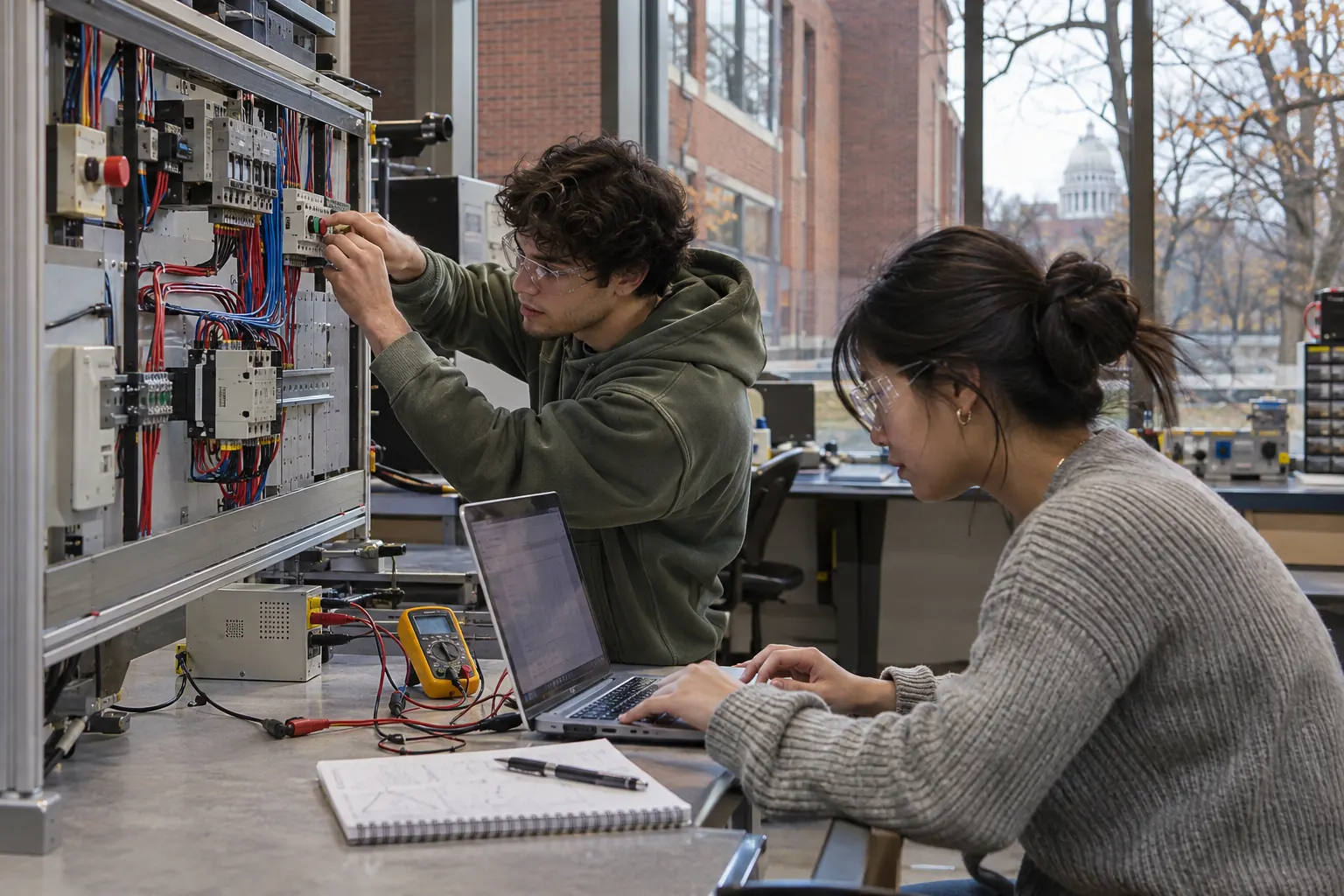
B.S. / 124 credits
Connect circuit analysis, instrumentation and embedded control in documented electrical systems.
Explore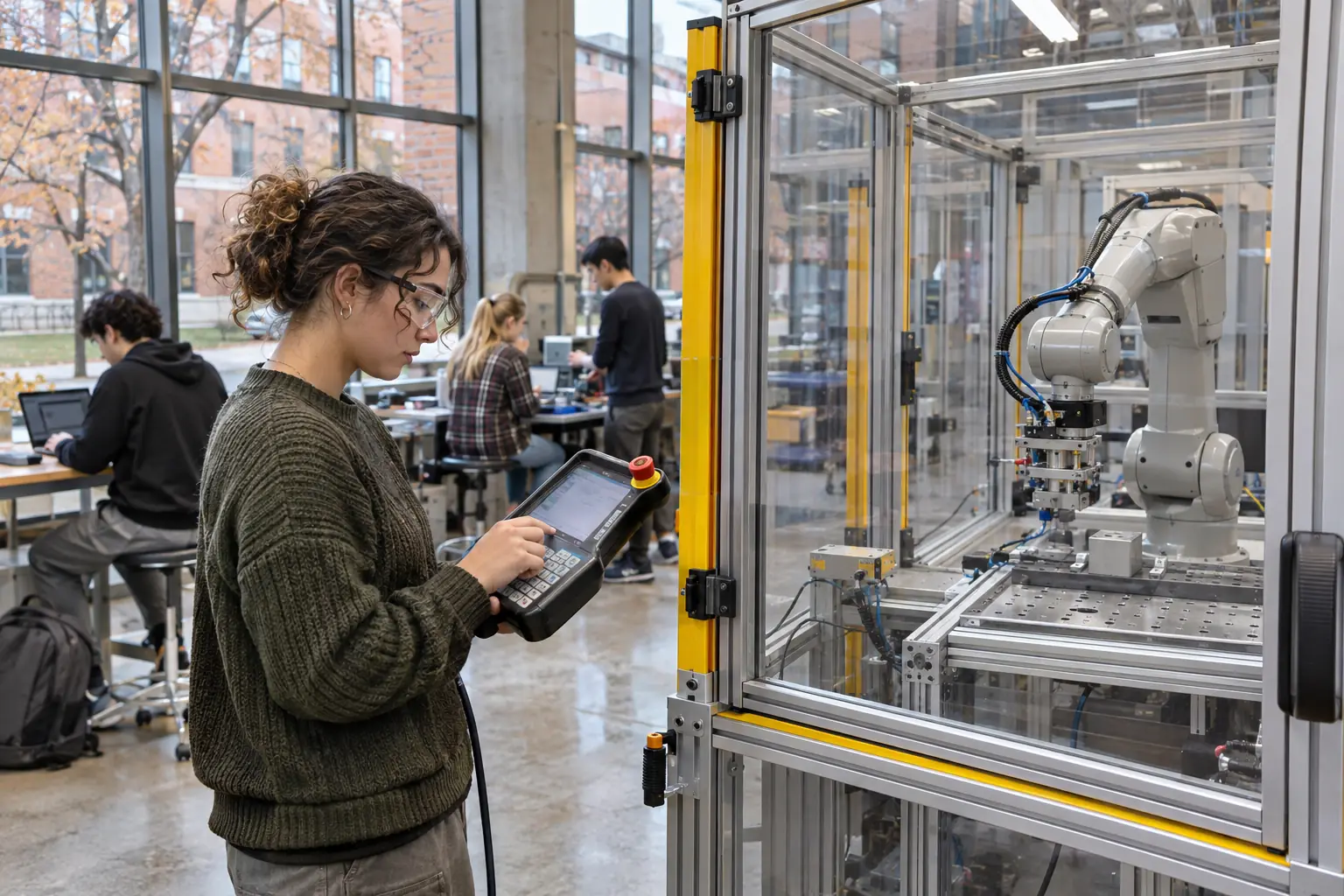
B.S. / 124 credits
Integrate motion, sensing and controls in repeatable, supervised automation projects.
Explore
B.S. / 120 credits
Build and maintain software through requirements, architecture, testing and team delivery.
Explore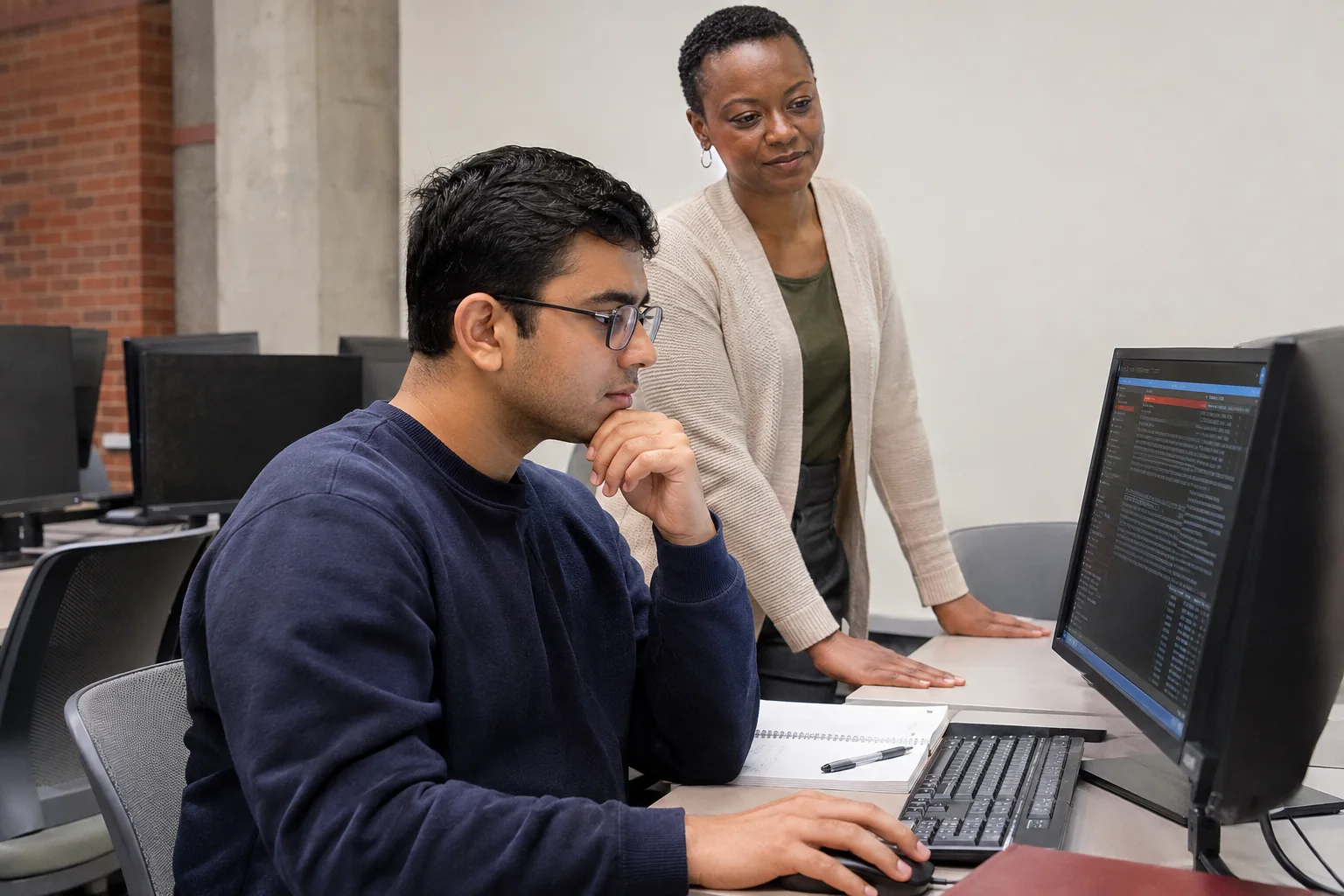
B.S. / 120 credits
Investigate risk and strengthen systems through authorized, evidence-based defensive work.
Explore
B.S. / 120 credits
Turn documented data into reproducible analysis while explaining uncertainty and practical limits.
Explore
B.S. / 124 credits
Develop products through observation, form studies, material decisions and evaluated prototypes.
Explore
B.S. / 120 credits
Design and evaluate useful digital experiences through research, prototyping and accessibility.
Explore
B.S. / 120 credits
Coordinate drawings, estimates, schedules and quality records for complex building work.
Explore
B.S. / 120 credits
Improve material and information flows through process observation, analytics and planning.
ExploreFour credit certificates provide a focused sequence in web applications, data analytics, cybersecurity foundations or digital fabrication. They use published courses and have their own attendance, admission and part-time cost considerations.
The 114-course catalog includes general education, foundations, specialist work and supervised practice labs. Use it with the degree map to understand the sequence behind a title. An adviser can help with transfer decisions and course readiness.
Start with a conversation. Come see the work.