The process is part of the result.
From a drawing
to an inspected component.
A manufactured part is more than a shape. Its material, dimensions, surface and assembly relationships determine whether it can do the job described in a drawing. The Advanced Manufacturing Lab gives students a supervised setting in which to connect those decisions.
Work begins with a plan. Students identify the intended process, prepare a drawing or model, review the setup and decide what to measure. After fabrication, inspection records provide the evidence for a revision or a completed task. A useful report explains both the result and the limits of the method.
Inside North Works.
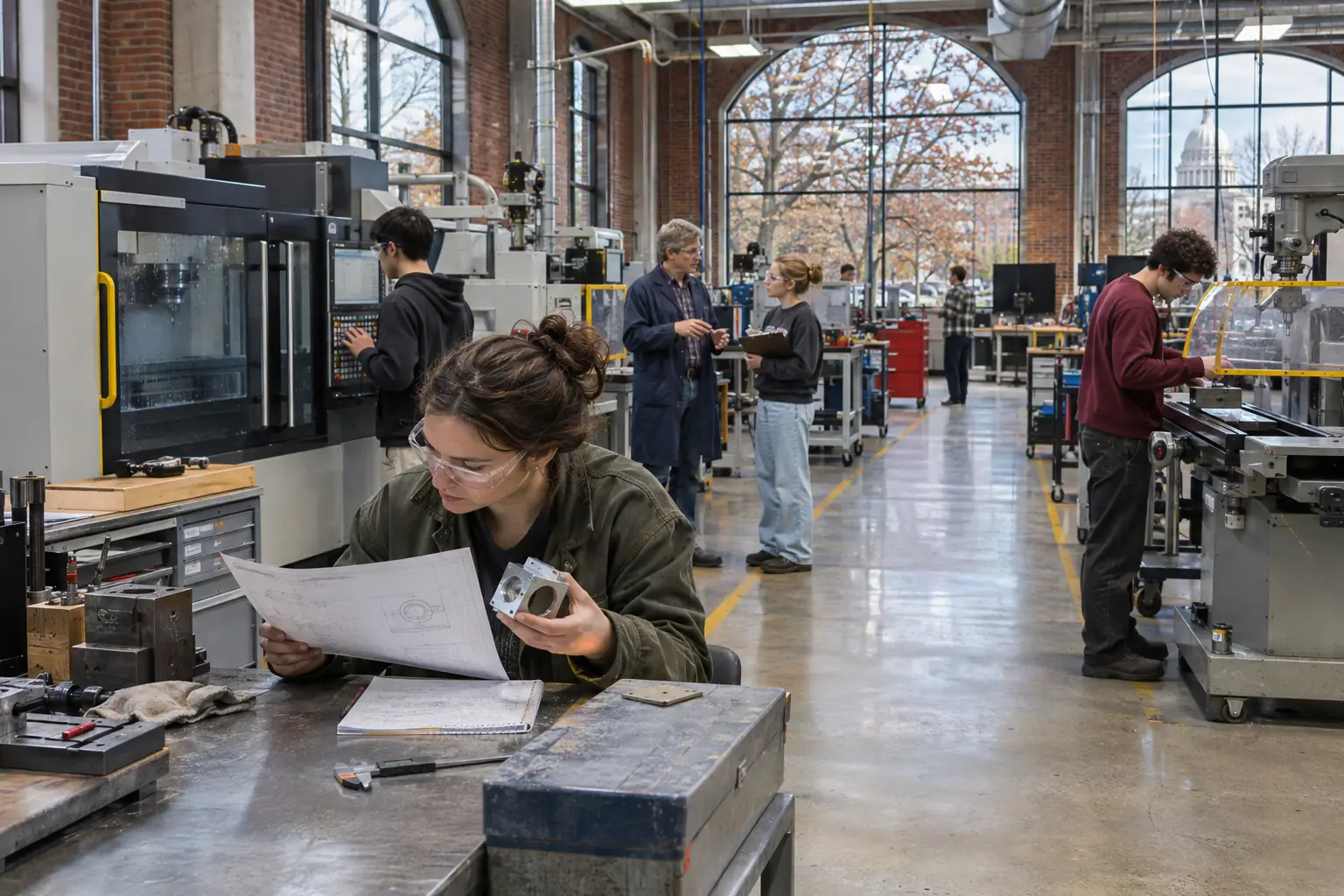
- Teaching machines and guarded trainersManual teaching machines and an enclosed CNC trainer support approved exercises. Equipment is used only after the appropriate induction and authorization.
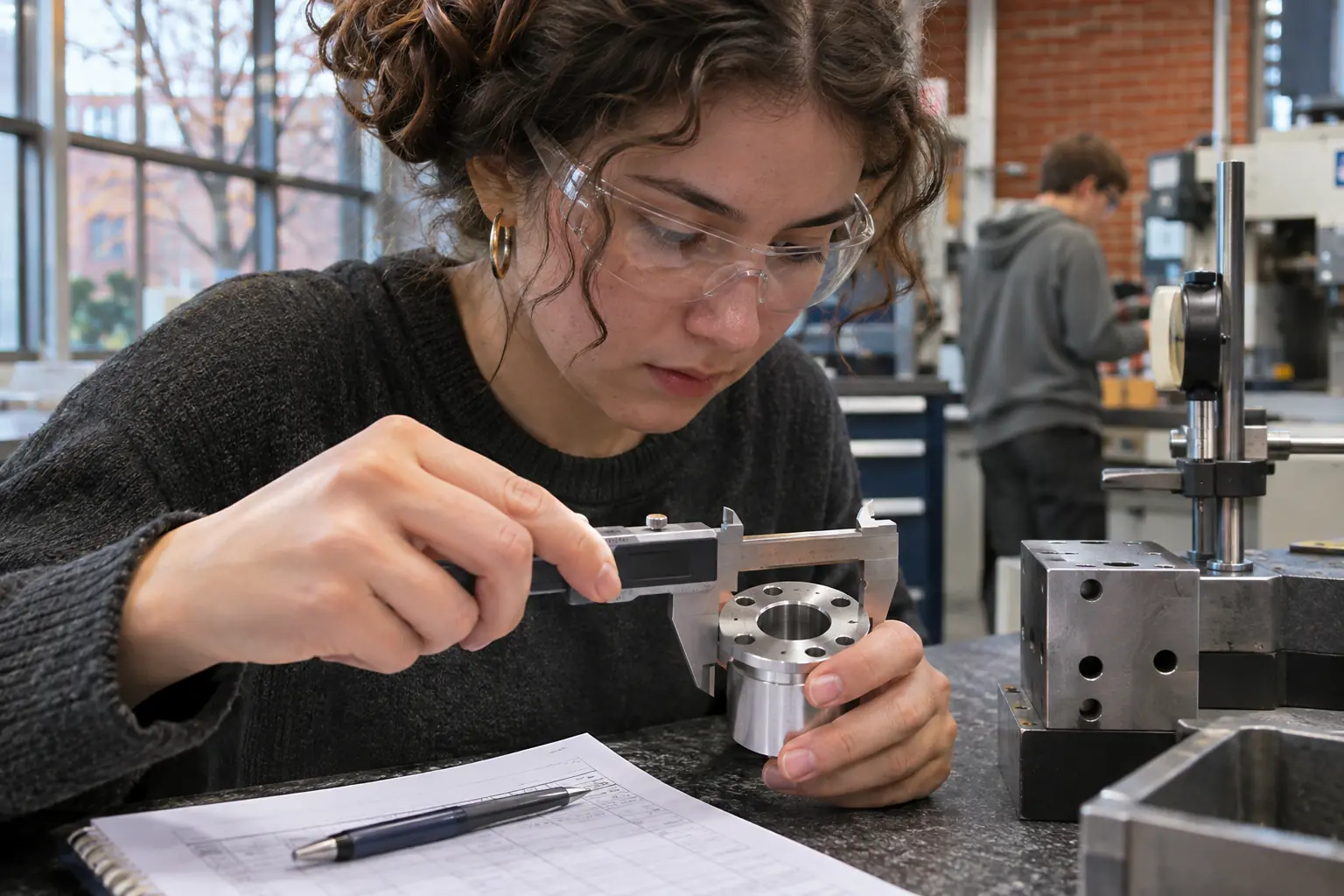
- Dimensional inspectionAn inspection bench connects a drawing with calipers, other teaching instruments and a repeatable record of measurements.
- Materials and process samplesExamples let students compare material behavior and discuss the constraints behind a process choice before committing to a prototype.
- A clear route through the taskMarked tool storage, a prepared work area and a separate inspection position help students keep both the component and the record organized.
Courses put the space to work.
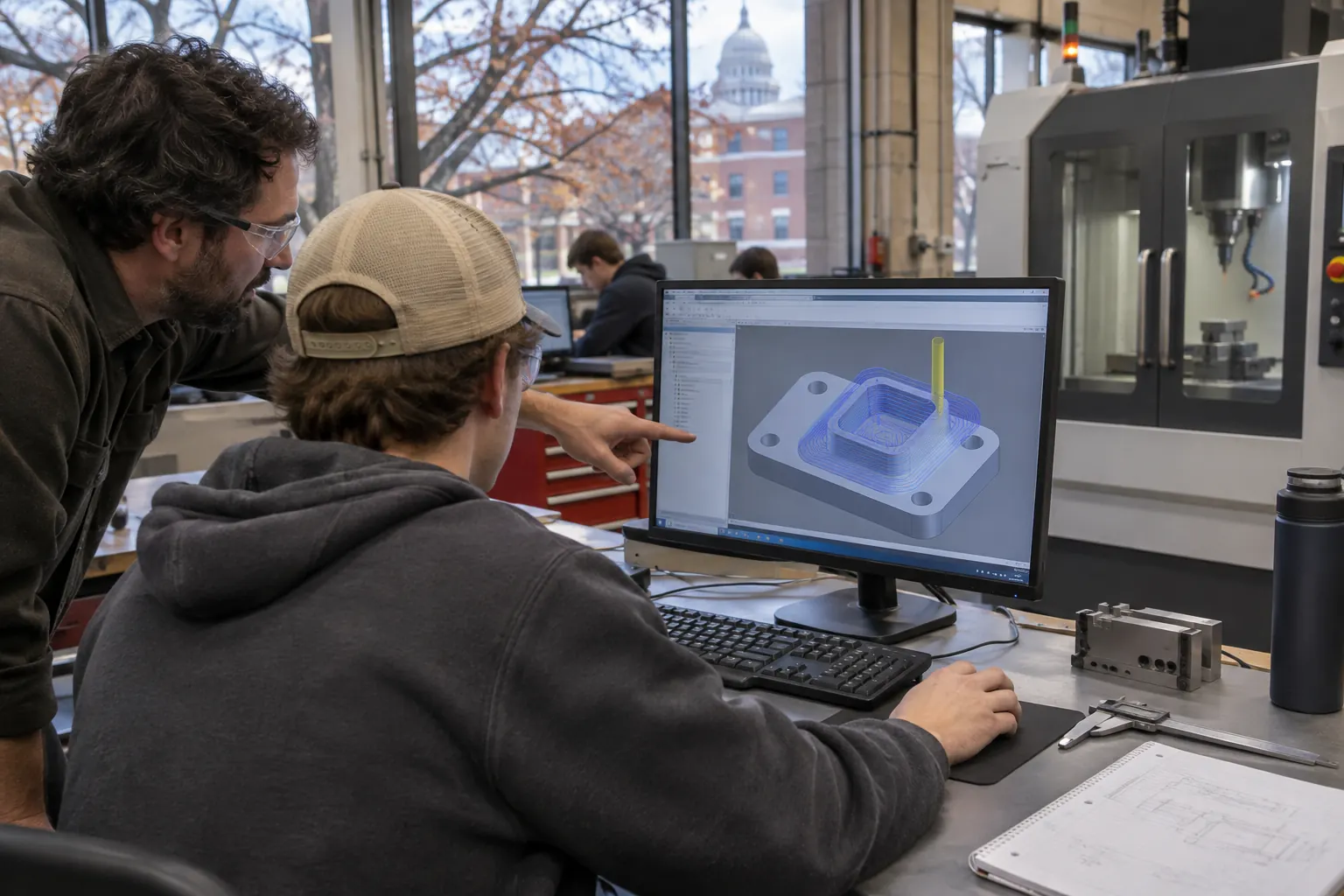
CAD and Technical Drawing establishes the geometry and communication conventions. Manufacturing Processes compares ways of producing a part. Computer-Aided Manufacturing connects a model with simulated toolpaths and process planning. Fabrication Practice asks students to complete an authorized task and check its dimensional result.
The room also supports mechanical projects and selected fabrication work from design courses. The teaching purpose and access arrangement are agreed in advance; the workshop is not a public drop-in maker space.
Explore an engineering pathwayBefore using the equipment.
- Join the approved activity. Confirm the course, project or supervised session with the responsible instructor.
- Complete local induction. Review workshop conduct, required clothing and the authorization for the specific tools involved.
- Prepare the task. Bring the drawing, material and intended process for review. Check that an appropriate measurement method is available.
- Work with supervision. Follow the session boundaries and stop to ask when a setup or result is uncertain.
- Leave a usable record. Return equipment, clear the work position and retain the process and inspection notes.
Come see a teaching session.
Prospective students can ask Admissions about a supervised campus visit. What a visitor sees depends on the class in progress and appropriate access to the room. A conversation at an observation point is often the best way to understand how a component moves from drawing to test.
Plan a visit