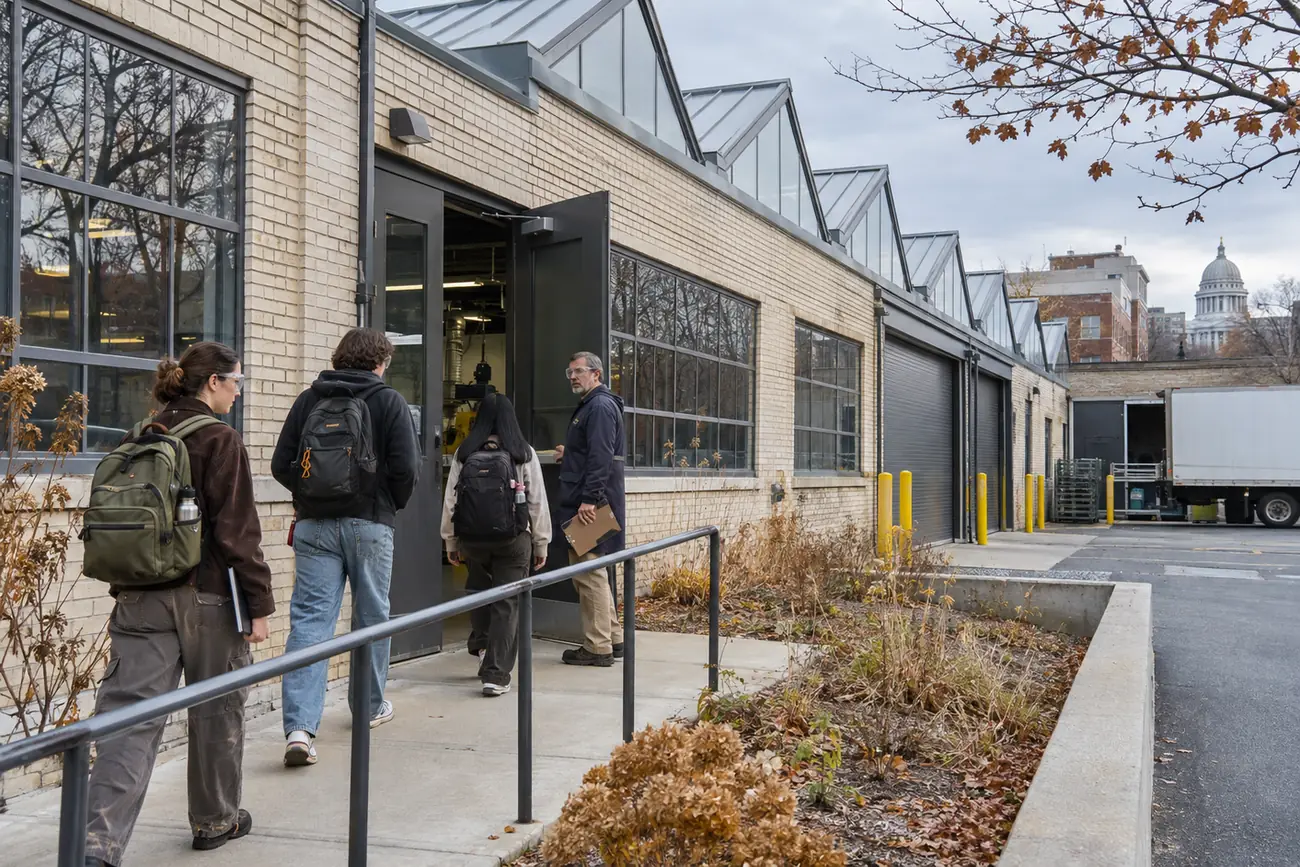
A mission carried into the work.
Larkmere prepares thoughtful technical practitioners who can build, evaluate, explain and improve. The mission connects a disciplinary method with the judgment to use it and the communication needed to make a result understandable.
That combination has changed its setting over time. A drafting room, a supervised teaching bench and an analytical notebook use different tools. Each asks a learner to connect a question with a method and a record of what happened.
From technical classrooms to applied degrees.
- 1964
Larkmere Technical Institute opens in Kepler Hall with mechanical drafting and industrial systems courses.
- 1978
North Works opens for supervised manufacturing and electrical laboratory teaching.
- 1986
Studio Annex adds product development and model-making spaces.
- 1994
Mercer Library opens with shared study and academic support spaces.
- 2001
The first four-year applied degree programs begin and the institute adopts its current name.
- 2002
Union House brings dining, student organizations and everyday services together.
- 2008
East Court Residences adds an on-campus housing option alongside commuter services.
- 2013
Vector Computing Center opens for software, networks and applied data teaching.
- 2019
Miriam Cole becomes president.
- 2024
The institute marks sixty years with a student project exhibition and renovation of shared fabrication teaching areas.
What has remained connected.
The institute’s 1964 beginning established a practical teaching focus. The four-year programs introduced in 2001 expanded that work with general education, a broader technical foundation and an increasingly independent final project. The current four-school structure supports different methods without separating the disciplines from one another.
Teaching spaces continue to be renewed through use and observation. A change to a workshop bench or a study service matters when it helps a learner carry out an actual task more clearly. History is visible not only in a building’s date but in the work it continues to support.