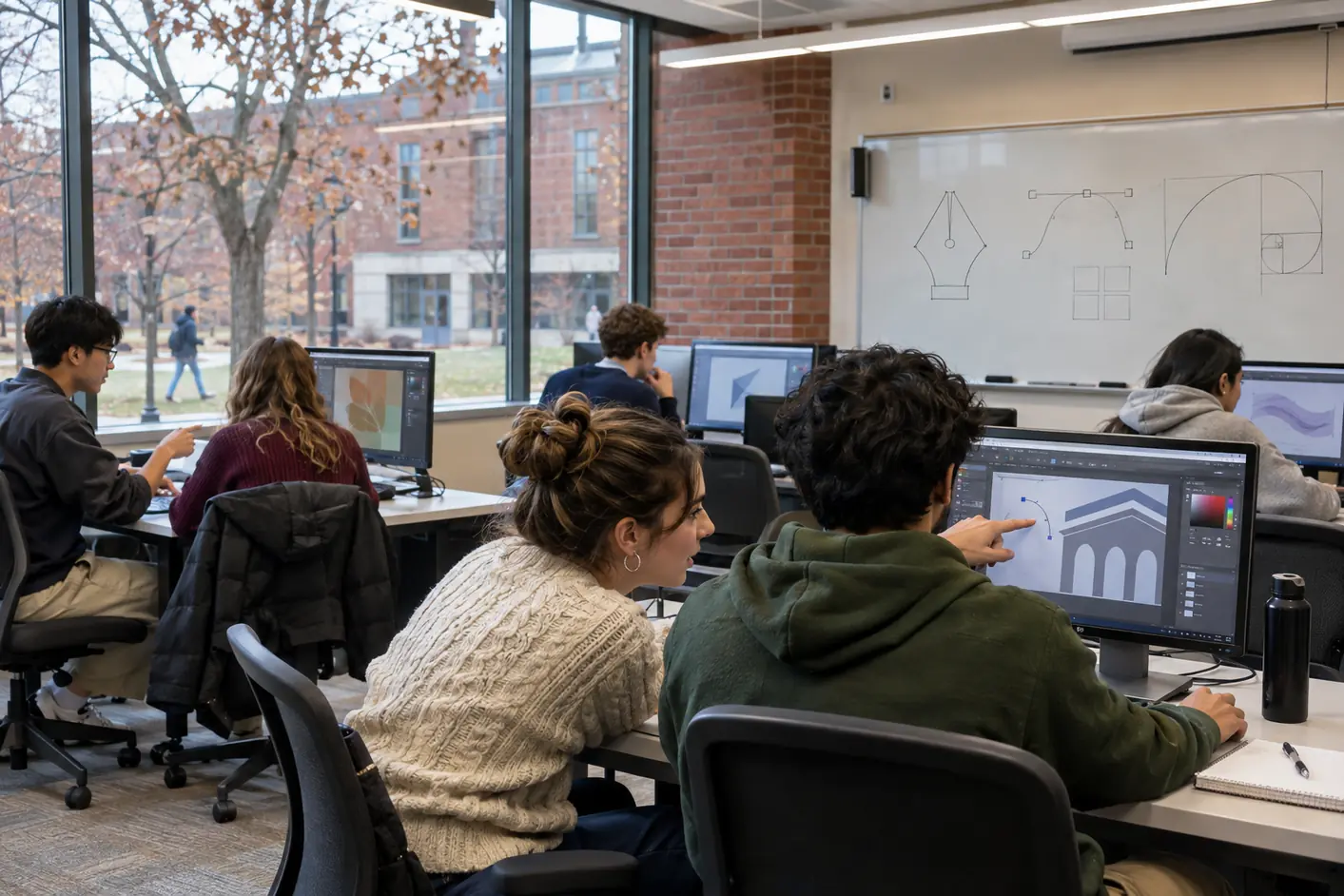
Several kinds of computing work.
Vector’s ordinary computing classrooms support applications, datasets and team projects. A separate isolated teaching cyber range supports authorized defensive exercises. The distinction matters: a general project room and a bounded security scenario have different information and access requirements.
General facilities include workstations, local teaching servers and small network trainers. Projects use prepared or approved information, with a clear scope for what is collected, changed and reported.
Build a result someone else can follow.
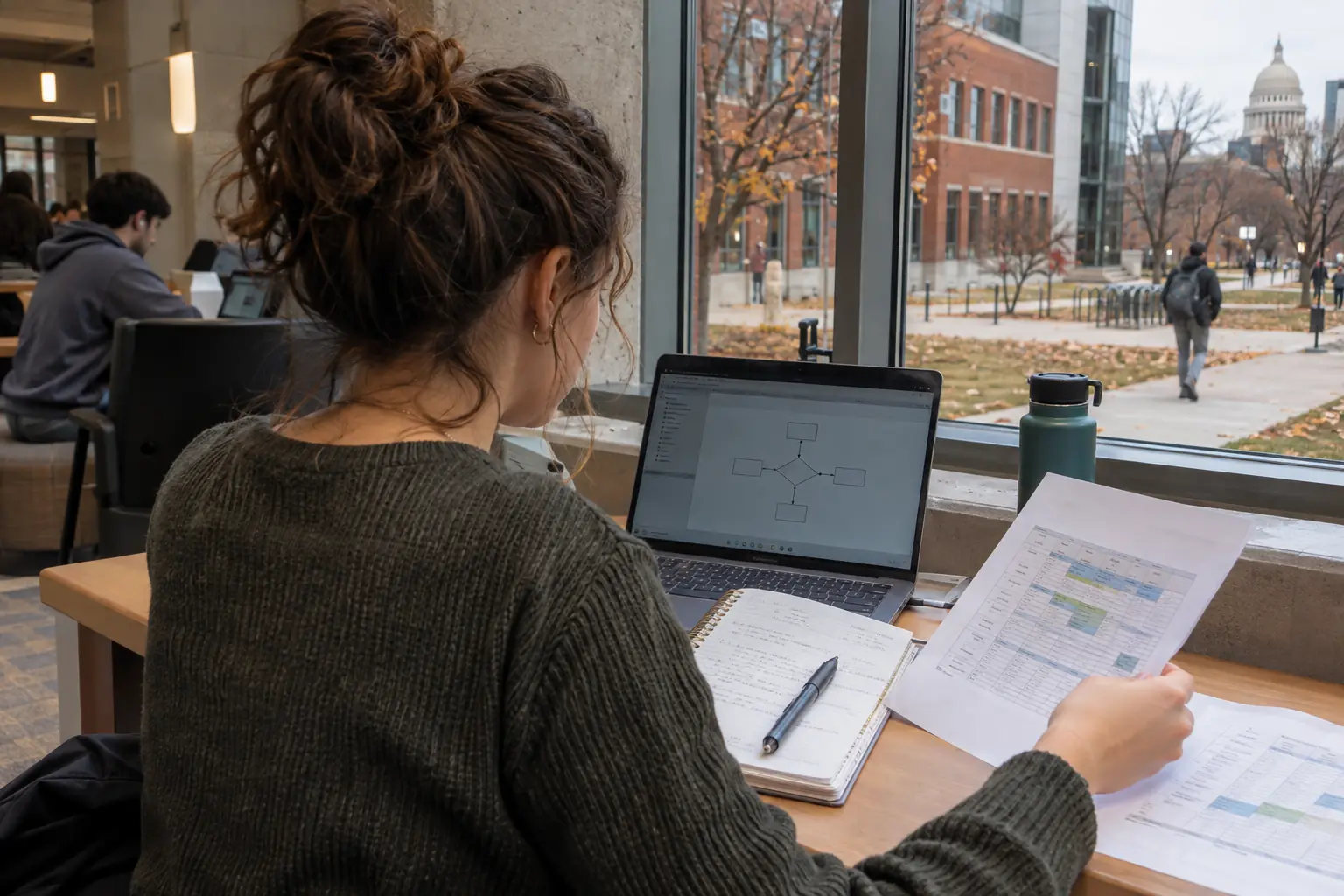
Software projects connect requirements, interfaces, tests and a version-controlled record. Data work connects a question with preparation, analysis and the evidence needed to evaluate it. In both, a useful handover lets another person understand how the result was reached.
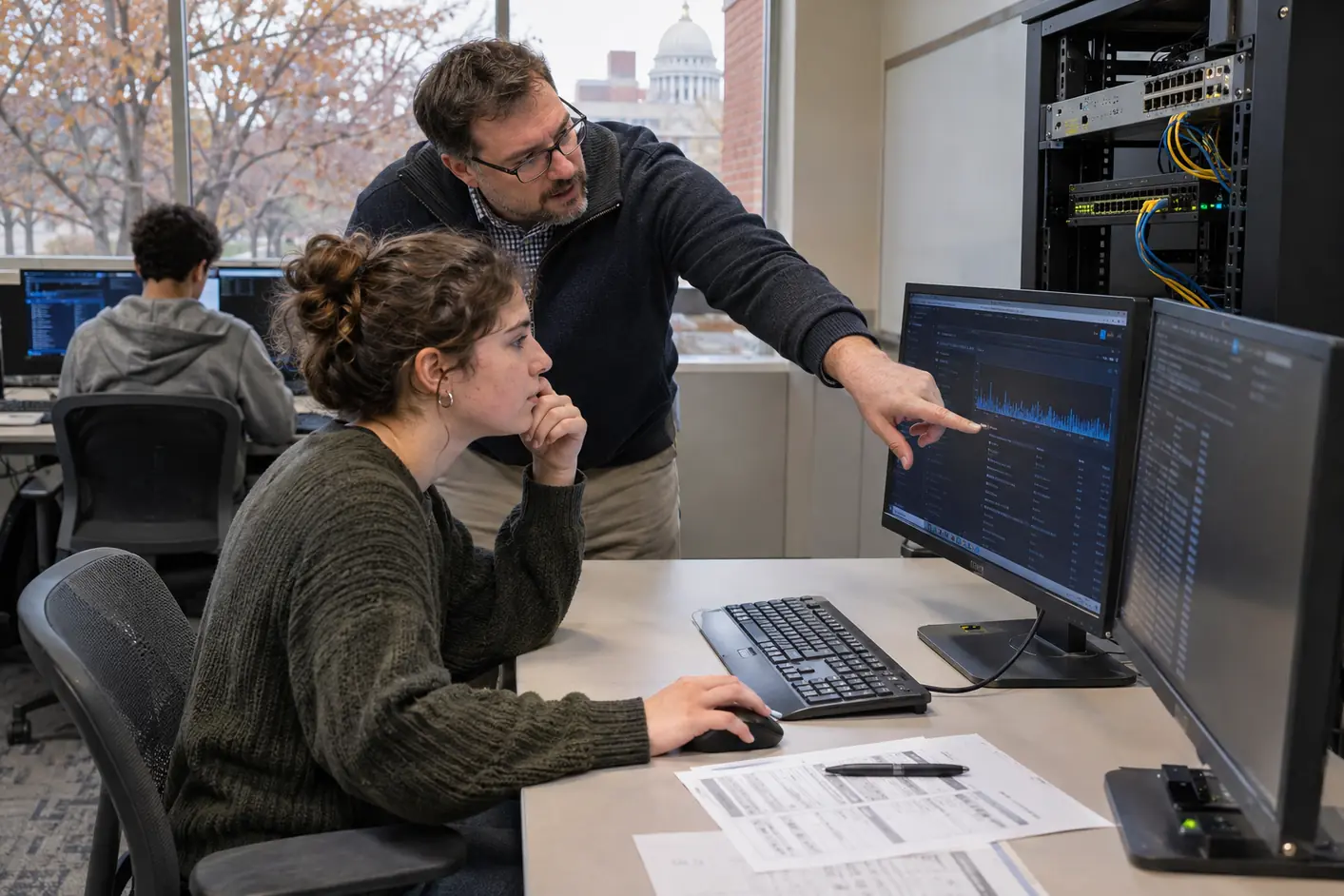
Security courses add an explicit authorization boundary. Network Defense examines a closed teaching network, while Digital Investigation uses prepared images and an investigation log. The aim is evidence-based defensive judgment rather than theatrical or unbounded attack activity.
Different methods, explicit boundaries.
Access and the teaching timetable.
Vector is open Monday–Friday 7:30 a.m.–10 p.m. and Saturday–Sunday noon–6 p.m. with student ID. Classrooms, servers and the range have activity-specific arrangements; an open building is not a blanket permission to access every system.
Ask the School of Computing & Data about a course or project setting. Teams should define information-use assumptions and any limitations before beginning a collection or investigation.
Connect the method with a pathway.
Software Engineering, Cybersecurity and Data Science share programming and systems foundations, then develop different forms of specialist evidence. Course descriptions show how a practical task fits the sequence.